Source Rotating Capacitive Touch Screen Pen for Office, School, and Business
Compare 30 rotating capacitive touch screen pen options from verified suppliers in China. Buyers can evaluate metal barrel designs, customization features, and pricing for promotional or daily office use.
Key considerations
Products List




Comprehensive Sourcing Guide
Strategic Sourcing Guide for Rotating Capacitive Touch Screen Pens
Navigating the global market for rotating capacitive touch screen pens requires a disciplined approach that separates marketing narratives from verifiable product attributes. Buyers in the B2B sector must prioritize technical compatibility, supply chain reliability, and regulatory compliance over superficial features. This guide outlines the critical dimensions of sourcing these specialized writing instruments, focusing on the intersection of mechanical design, electronic functionality, and procurement logistics. The following analysis provides a framework for evaluating potential suppliers and products without relying on unverified claims or speculative data.
Technical Specifications and Mechanical Design
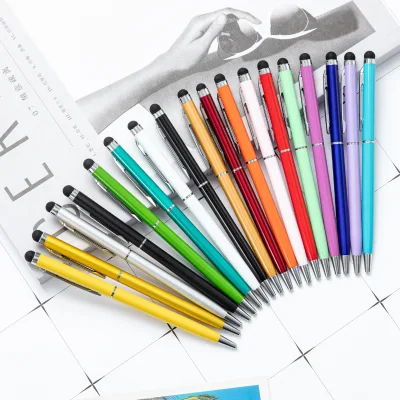
The core functionality of a rotating capacitive touch screen pen lies in its unique mechanical architecture. Unlike standard styluses, these devices incorporate a rotating mechanism, often found in the barrel or tip assembly, which allows the user to adjust the writing angle or access different functions without removing the pen from the screen. When evaluating technical specifications, buyers must verify the material composition of the barrel and the precision of the rotating joint.
In the context of available market data, metal construction is a prevalent standard for high-durability pens. The material choice directly impacts the capacitive conductivity required to interact with modern touchscreens. A metal barrel pen, as noted in specific product standards, offers superior signal transmission compared to plastic alternatives. However, the specific dimensions of the barrel are critical. Standards such as 133*7.5mm or similar metric measurements define the physical footprint, ensuring the pen fits comfortably in the hand while maintaining a low center of gravity for stability during rotation.
The tip diameter is another non-negotiable specification. For capacitive screens, the tip must be conductive and of a specific size to register touch inputs accurately. A point diameter of 0.7mm is a common specification for ball-point style capacitive tips, balancing precision with screen protection. Buyers should verify that the tip material is compatible with the screen's coating to prevent scratching. Furthermore, the rotation mechanism itself must be tested for smoothness and durability. The "Partial Hard" or "Medium Soft" hardness attributes observed in various product listings refer to the tactile feedback of the writing tip, which varies based on the ink formulation and tip composition.
| Feature | Critical Verification Point | Typical Observation |
|---|---|---|
| Barrel Material | Conductivity and Durability | Metal, Aluminum Barrel |
| Tip Diameter | Screen Compatibility | 0.7mm |
| Rotation Mechanism | Smoothness and Locking | Adjustable Angle |
| Ink Type | Flow and Drying Time | Water-Based Ball Pen |
| Weight | Ergonomics | Varies by Standard (e.g., 10g) |
Compliance and Certification Verification
In the B2B procurement landscape, regulatory compliance is a primary filter for supplier selection. Buyers must demand evidence of adherence to international safety and environmental standards. The supply chain for electronic accessories and writing instruments is heavily regulated, particularly regarding hazardous substances.
Certifications such as RoHS (Restriction of Hazardous Substances) and CE (Conformité Européenne) are frequently cited in product specifications. RoHS compliance ensures that the pen does not contain lead, mercury, cadmium, or other restricted materials, which is essential for export to the European Union and other markets with strict environmental laws. CE marking indicates that the product meets EU safety, health, and environmental protection requirements. While some background data mentions REACH, buyers should treat this as a verification target rather than an automatic guarantee, requiring the supplier to provide current test reports.
It is crucial to distinguish between marketing claims and actual certification status. A supplier may state that a product is "High Quality" or "Certified," but the buyer must request the specific certificate documents. For instance, a product standard labeled "aluminum barrel pen" or "metal barrel pen" must be accompanied by material safety data sheets if the metal alloy contains trace elements of concern. The absence of a specific certification number or a valid third-party audit report should be treated as a red flag. Buyers should also verify that the ink used, often described as "Water-Based Ball Pen," meets local regulations regarding toxicity and disposal, especially for promotional items distributed to schools or offices.
Cost Drivers and Pricing Structures
Understanding the cost structure of rotating capacitive touch screen pens is essential for budgeting and negotiation. The price range in the market can be volatile, observed from as low as $0.06 to as high as $16 per unit, depending on the complexity of the design and the order volume. This wide disparity is driven by several key factors.
First, the material cost is a significant driver. Metal barrels, particularly those made from aluminum or high-grade alloys, are more expensive than plastic alternatives. The precision engineering required for the rotating mechanism also adds to the manufacturing cost. Second, customization plays a massive role in pricing. Products offering "Customized" logos via methods like "Silkscreen" printing or laser engraving incur additional setup and per-unit costs. The complexity of the logo design and the number of colors involved (e.g., "Four-Color" or "Eight-Color" options) directly impact the final price.
Third, the Minimum Order Quantity (MOQ) dictates the unit price. Suppliers often set MOQs at levels such as 3000 pieces, 5000 pieces, or even up to 5000 units for specific custom runs. Orders below these thresholds may incur a premium price or be unavailable. Conversely, larger orders benefit from economies of scale. The packaging requirements also influence cost; options range from simple "1PCS/OPP Bag" to more elaborate "50PCS/White Box" or "500PCS/Carton" configurations. Buyers must calculate the total landed cost, including packaging, to determine the true value proposition.
Typical Applications and Usage Scenarios
Rotating capacitive touch screen pens serve a diverse range of applications, extending beyond simple writing tasks. Their primary usage categories include promotional pens, office and school supplies, and business gifts. The versatility of these devices makes them suitable for various occasions, such as corporate events, trade shows, and educational settings.
The "Promotional Pen Type" classification highlights their role in marketing. Companies often utilize these pens to distribute branded merchandise that offers utility, thereby increasing brand visibility. The ability to customize the logo ensures that the pen serves as a functional advertisement. In an office or school environment, the "Water-Based Ball Pen" feature provides a smooth writing experience, while the capacitive tip allows users to annotate digital documents, sign contracts, or navigate tablets without switching devices.
The "Sports" body type mentioned in some product attributes suggests a design aesthetic that appeals to active demographics or specific corporate teams. The "Erasable" feature adds another layer of utility, allowing for corrections without leaving residue, which is particularly valuable in educational or drafting scenarios. The seasonal applicability, covering "Spring/Summer/Autumn/Winter," indicates that these pens are not limited to specific times of the year, making them a year-round procurement option for various industries.
Supplier Evaluation and Production Capacity
Selecting the right supplier requires a thorough evaluation of their production capabilities and logistical reliability. The supply chain for these pens often originates from manufacturing hubs in China, specifically regions like Zhejiang and Yiwu. These locations are known for their concentration of pen manufacturers and export infrastructure.
Buyers should assess the supplier's output capacity to ensure they can meet demand. A typical high-confidence fact regarding production capacity might indicate an output of 50,000 pieces in 35 days. This metric is vital for planning large-scale orders and avoiding delays. The lead time, often linked to the production capacity, must be factored into the procurement timeline. Additionally, the payment terms, such as T/T (Telegraphic Transfer), are standard in the industry and should be clearly defined in the contract.
The customization capabilities of the supplier are also a key evaluation point. Suppliers offering "Customized" logos and various "Logo Method" options, such as silkscreen printing, demonstrate flexibility. However, buyers must verify the supplier's ability to handle different packaging requirements, from individual OPP bags to bulk cartons. The "prod_packing" specifications, such as "1PC OPP Bag, 50PCS Inner Box, 500PCS Master Carton," indicate the supplier's readiness for different distribution channels. A supplier with a proven track record in handling "High" quality standards and meeting specific model numbers (e.g., MP005, NP118, HP008) is preferable.
Quality Control and Long-Term Procurement Considerations
Ensuring consistent quality is paramount for long-term procurement success. The "Quality: High" attribute observed in product listings is a claim that must be validated through rigorous quality control (QC) processes. Buyers should implement a multi-stage QC strategy, including pre-production sample approval, in-process inspection, and final random inspection (FRI) before shipment.
Key quality checks should focus on the functionality of the rotating mechanism, the consistency of the ink flow, and the durability of the capacitive tip. The "Hardness" of the pen, whether "Partial Hard" or "Medium Soft," should be consistent across the batch to ensure a uniform writing experience. For promotional items, the quality of the logo printing is critical; smudged or misaligned logos can damage the brand image.
Long-term procurement considerations involve building a sustainable relationship with the supplier. This includes negotiating favorable payment terms, securing consistent lead times, and establishing clear communication channels for addressing defects. The "Disposable: Non-Disposable" attribute suggests that these pens are designed for repeated use, which aligns with sustainability goals. Buyers should also consider the environmental impact of the packaging materials, such as the use of recyclable OPP bags and cartons.
Finally, buyers must remain vigilant about changes in standards and regulations. As environmental laws evolve, the certification requirements for materials like aluminum and ink formulations may change. Maintaining a close relationship with the supplier ensures that the procurement strategy remains compliant and competitive. By focusing on verified specifications, robust quality control, and reliable supplier partnerships, buyers can secure a steady supply of high-quality rotating capacitive touch screen pens that meet their specific operational and marketing needs.
FAQs
What materials are used for rotating capacitive touch screen pens?
Metal construction is the prevalent standard for high-durability pens in this category. Specific product standards confirm the use of aluminum barrels to ensure superior signal transmission for capacitive interaction.
Can I customize the logo on these rotating pens?
Yes, customization is available with options for customized logos. Suppliers offer methods like silkscreen printing to apply branding, though this may affect the unit price and minimum order requirements.
What is the typical point diameter for these capacitive tips?
A point diameter of 0.7mm is a common specification for ball-point style capacitive tips. This size balances precision with screen protection while ensuring accurate touch registration on modern devices.
Which certifications should I verify for these electronic accessories?
Certifications such as RoHS and CE are frequently cited in product specifications. RoHS ensures the absence of hazardous substances, while CE indicates compliance with EU safety and environmental protection requirements.
How does the MOQ affect the pricing of these pens?
Suppliers often set Minimum Order Quantities at levels such as 3000 pieces or 5000 units. Orders below these thresholds may incur a premium price, while larger orders benefit from economies of scale.
What is the production capacity for bulk orders of these pens?
Typical high-confidence facts indicate an output capacity of 50,000 pieces within 35 days. This metric is vital for planning large-scale orders and ensuring the supplier can meet your demand timeline.